Frapper monnaie : la fabrication des monnaies de bronze à Alexandrie sous les Ptolémées
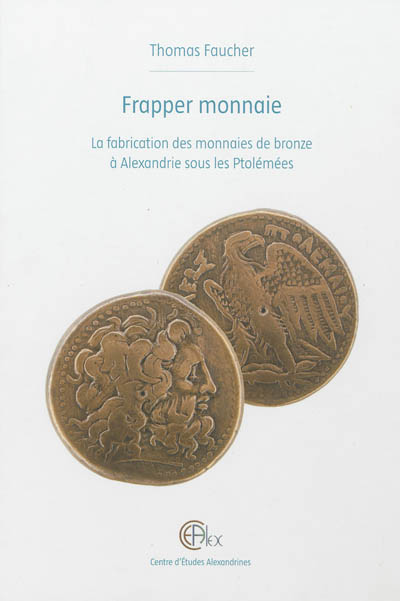
Les monnaies lagides en bronze de l'atelier d'Alexandrie fournissent un exemple unique pour traiter
l'ensemble de la chaîne opératoire de la production monétaire, de l'approvisionnement en métal à
la frappe des monnaies. Outre la provenance des différents éléments nécessaires à la fabrication des
bronzes, il est possible de commenter l'évolution de l'alliage ainsi que d'aider au classement des séries
monétaires grâce aux analyses de composition métallique. L'atelier monétaire et ses composantes
offrent un deuxième champ d'étude. Les sources antiques étant presque inexistantes, il a fallu se
reporter à la monnaie elle-même pour obtenir des informations sur le graveur et sa production : le
coin. La gravure des types monétaires conduit notamment à s'interroger sur l'identification des images
choisies par les autorités. Contribuant à l'histoire des techniques, la réflexion porte enfin sur le travail
mené au sein de l'officine : fabrication des flans, travaux de finition et frappe de la monnaie. Cette
étude montre l'évolution du monnayage de bronze lagide. Issu d'une forte tradition macédonienne,
il s'est adapté et modernisé pour devenir un numéraire original. Pour autant, l'atelier d'Alexandrie ne
fait pas figure d'exception, il est simplement le reflet de l'évolution du monde hellénistique.
Ptolemaic bronze coins from the Alexandria mint provide
a unique example for examining the full extent of the
operational chain of monetary production, from the supply
of metal to striking the coin. Aside from the provenance of the
different constituents necessary for the creation of bronze, one can also
comment upon the evolution of the alloy and thus class distinct coin series through
an analysis of the metallic composition. The mint and its component parts provide a second field of
study. Given that ancient sources are almost non-existent, one must look at the coin itself to obtain
information regarding the engraver and his creation: the die. The engraving of coin types leads to
questions regarding the identification of images chosen by the authorities, and as part of the history
of technology, thoughts must turn to the work undertaken within the workshop: making the blanks,
trimming and finishing, and striking the coin. This study demonstrates the evolution of Ptolemaic
bronze coinage. As a continuation of a strong Macedonian tradition, the coinage was adapted and
modernised to become an extraordinary currency. For all this, the Alexandrian mint was not actually
exceptional. It was simply a reflection of the evolution of the Hellenistic world.