Adolphe Sax : his life, his creative genius, his saxophones, a musical revolution
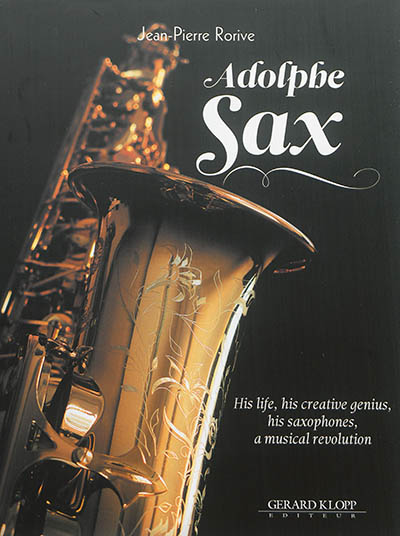
Born 1814 in Dinant (Belgium) and deceased 1894 in
Paris where he spent most of his career, Adolphe Sax is
recognized as being one of the greatest inventors of the
19<sup>th</sup> century. He is also one of the most revolutionary
instrument makers in the history of music. He improved to the
point of perfection most instruments of his era, and invented
many others, mainly the saxtromba, saxhorn and saxophone
families. Eccentric, slightly megalomaniac, he is also the father of
numerous inventions and projects which were in no way related
to music, including a "saxo-cannon" capable of destroying
Sebastopol, and an extraordinary whistle for the steam trains.
His life reads like a novel. Starting from nothing, and flirting with
poverty, Sax rapidly attains fame and regularly associates with the
famous composers of the romantic era including Liszt. Rossini, Berlioz
and Meyerbeer extol the genius of the prophet who had been awaited
to fulfill the dream of an orchestral revolution. With the same enthusiasm
Napoléon III embraces his reform of military bands as well as his
instruments, immediately following with the fanfares and civil orchestras.
But his competitors declare war on the "Belgian", who vexes them by
sweeping the gold medals at the world exhibitions. They even go so far
as to contest his patents without hesitating to counterfeit his instruments;
they instigate a long running court case against him, from which he
will eventually emerge victorious, but which leads this tenacious fighter,
miraculously saved from cancer, twice to bankruptcy. It is not only Sax's
powerful personality he revives with passion, but the entire effervescent
Parisian musical scene.
In addition, this richly illustrated work evokes the impressive authority
of the saxophone in styles as different as classic, military
music and jazz; the latter giving it a second life as well
as bestowing upon its inventor posthumous celebrity.