Reading newspapers : press and public in eighteenth-century Britain and America
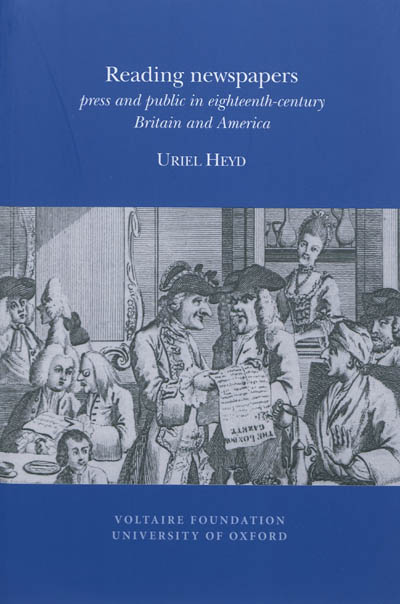
In their first century of uninterrupted publication,
newspapers reached an all-embracing readership:
male and female, noble and artisan, in both
town and country. Such was its impact that this
seemingly ephemeral product became a collector's
object. In Reading newspapers Uriel Heyd examines
this vibrant new print medium and investigates its
political, social and cultural implications.
Adopting a comparative approach, the author
traces the culture of newspaper reading in
Britain and America. Previously unexplored
sources such as newspaper indexes and
introductions, plays, auction catalogues and a
unique newspaper collection assembled and
annotated by a Bostonian shopkeeper, provide
invaluable access to perceptions of the press,
reading practices, and the ever-changing
experience of consumers. While newspapers
supplied news of immediacy and relevance, their
effect transcended the here and now, influencing
readers' perceptions of the age in which they
lived and helping to shape historical memory.
But the newly found power of this media also
gave rise to a certain fear of its ability to exploit
or manipulate public opinion. Perceived as
vehicles of enlightenment, but also viewed with
suspicion, the legacy of eighteenth-century
newspapers is still felt today.