Matisse et la gravure : l'autre instrument. Matisse and engraving : the other instrument
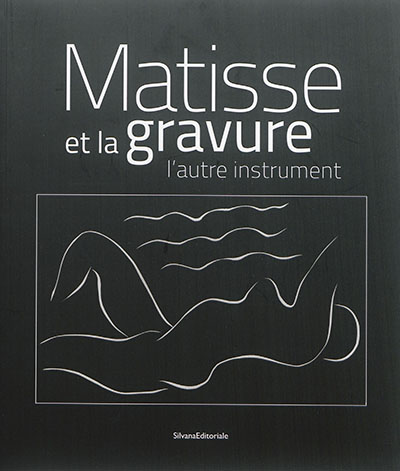
Matisse et la gravure : l'autre instrument , qui mieux que la fille d'Henri Matisse,
Marguerite, pouvait ainsi décrire le travail d'estampe de l'artiste ? Chargée par
son père de valider les tirages, elle est, avec son fils Claude Duthuit, auteure du
catalogue raisonné de l'OEuvre Gravé. Elle a consacré une grande partie de sa vie à
faire découvrir «ce continent inconnu» dont la dimension est pourtant essentielle
à qui veut comprendre le cheminement d'un artiste reconnu avant tout pour sa
maîtrise des couleurs.
Le Musée départemental Matisse, grâce à l'aide de la famille Matisse, notamment
de Barbara Duthuit, et de prestigieuses institutions, explore dans ce catalogue toutes
les techniques de gravure pratiquées par Matisse de 1900 jusqu'à la fin de sa vie.
Pour lui, gravure, dessin, peinture, sculpture ont la même importance, et sont
représentées dans cet ouvrage toutes les grandes thématiques qui construisent ses
recherches sur la figure humaine.
Pour la première fois les matrices (bois gravé, pierre lithographique, pointe sèche, eauforte,
linogravure...) accompagnent les oeuvres et nous font comprendre qu'exigence
et travail, dans une économie de moyens, conduisent Matisse à transformer le noir
en couleurs au service de la pureté du trait.
Matisse and engraving: the other instrument , who other than Henri Matisse's
daughter Marguerite could describe his engraving in this way? Responsible for
validating her father's press-proofs, she is, along with her son Claude Duthuit, the
author of the catalogue raisonné of his engravings. She has devoted a large part
of her life to allowing this "unknown continent" to be discovered and which is
nevertheless essential in understanding the progression of an artist known above
all for his mastery of colour.
The Matisse Departmental Museum, with the help of the Matisse family, and notably
Barbara Duthuit, and some most prestigious institutions, explores in this catalogue
all of the engraving techniques used by Matisse from 1900 and up to the end of his life.
For him, engraving, drawing, painting, sculpture all had the same importance, and in
this work all the key themes, which led him to build his research around the human
figure, are represented.
For the very first time the matrices (woodcut, lithograph, drypoint, etching, linocut...)
accompany the works and help us to understand that high standards and hard work,
along with an economy of means, led Matisse to transform black into a colour that
he used to serve the purity of line.