Un édifice inachevé du quartier royal à Alexandrie. Un fragment de corniche peinte hellénistique à Alexandrie
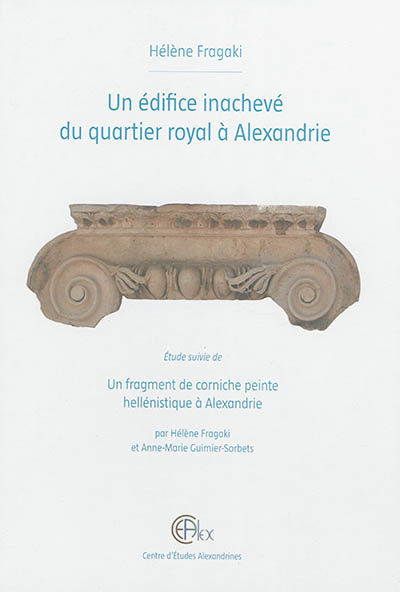
La découverte récente d'éléments architecturaux ébauchés à Alexandrie, à proximité du lieu où
avaient été trouvés, pendant les premières décennies du XX<sup>e</sup>s., des vestiges similaires, confirme la
présence d'un chantier de construction à cet emplacement, qui faisait partie des quartiers royaux ptolémaïques. L'étude de l'ensemble de ces blocs, aussi bien déjà publiés qu'inédits, permet de
reprendre leur datation, de proposer une nouvelle identification du monument auquel ils étaient
destinés, mais aussi d'éclairer, à l'aide des sources littéraires, la topographie de cette zone très
mal connue. L'état inachevé des éléments offre l'opportunité de suivre le travail des tailleurs et
d'appréhender les pratiques de construction. Morphologiquement et chronologiquement proche
de ces vestiges, un fragment de corniche dorique peinte, mis au jour lors des fouilles du CEAlex sur
le chantier avoisinant du jardin de l'ex-Consulat britannique, complète ces traces de l'architecture
des basileia lagides au cours de la haute époque hellénistique.
The recent discovery of unfinished architectural elements in Alexandria, close to a spot where
similar vestiges were found in the first decades of the 20th century, serves to confirm the presence
at this location of a construction site that was part of the Ptolemaic royal quarters. A study of the
ensemble of these blocks, both those previously published and those still to be so, allows for a
reconsideration of the dating and for a proposal regarding a novel identification of the monument
for which they were destined. The study can also, with the help of the literary sources, throw some
light on the topography of this still poorly known area. The incomplete State of the elements
provides an opportunity to follow the work of the masons and to understand construction practices.
A painted fragment of a Doric cornice, morphologically and chronologically close to these vestiges,
that was unearthed on a neighbouring site during excavations by the CEAlex complements these
traces of the architecture of the Ptolemaic basileia from the golden age of the Hellenistic era.