Thravsma : contextualising the intentional destruction of objects in the Bronze Age Aegean and Cyprus
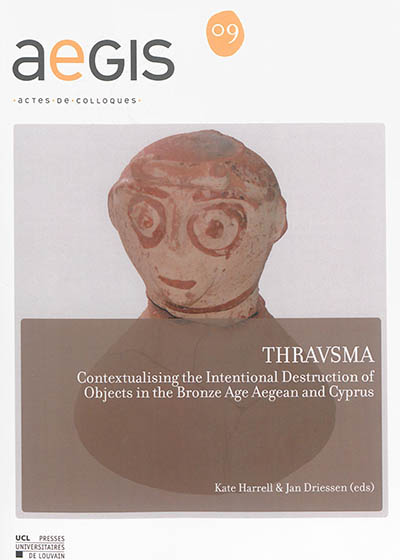
How does intentionally inflicting damage to material objects mediate the human experience in the prehistoric
eastern Mediterranean? For all of the diversity in cultural practice in the civilisations of the Greek mainland and
Aegean islands, Crete, Cyprus and the eastern coast of Italy between 4000-750 BC, archaeologists consider the
custom of ritually killing objects as a normative, if inconsistent practice. Yet as artefacts that are alike only in
that they have been disarticulated, intentionally destroyed objects defy easy characterization. Such pieces frequently
stand outside of clearly defined patterns. This volume is an initial step in addressing a gap in the scholarship
by aiming to deconstruct and contextualize the practice of intentional fragmentation. The case studies in
this volume present a diverse range of evidence, including pottery, lithics, metals, jewellery, figurines, buildings
and human remains, in an exploration of the wide spectrum of meanings behind material destruction.