Hippocrate et les hippocratismes : médecine, religion, société : actes du XIVe Colloque international hippocratique
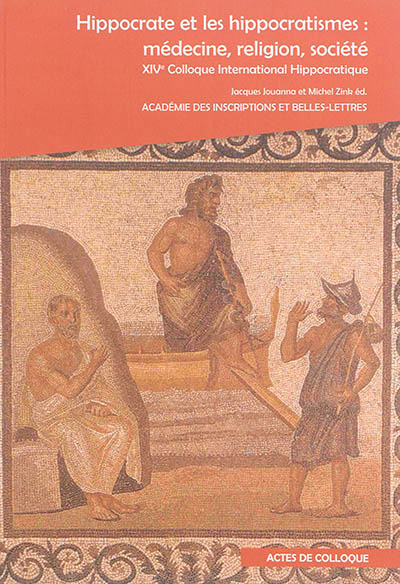
Ce très riche volume réunit vingt-deux contributions présentées par les meilleurs spécialistes
de la Collection hippocratique lors du XIV<sup>e</sup> Colloque International Hippocratique organisé
à Paris, du 8 au 10 novembre 2012. Un premier groupe d'études contribue à enrichir notre
connaissance et notre appréciation des différentes oeuvres du Corpus , via l'effort de reconstitution
du texte original ou l'analyse du vocabulaire, des thèmes et des thèses développés dans les traités
hippocratiques, et notamment la question du rapport au divin ou l'éthique du médecin. Un second
ensemble de contributions conduit à analyser la relation de la médecine hippocratique à son contexte
culturel aux V<sup>e</sup> et IV<sup>e</sup> siècles (médecine populaire, religion et philosophie) afin de déterminer à la
fois les influences et les ruptures qui caractérisent la théorie et la pratique médicale hippocratiques,
et, en particulier, le mode de rationalité nouveau qu'elles introduisent dans l'histoire de la pensée
et de la science. Enfin, des études portent sur la transmission, l'interprétation et la réception de
l'hippocratisme dans la pensée médicale ultérieure (de Galien à Harvey), ainsi que dans les trois
grandes religions monothéistes (juive, chrétienne, islamique). En adoptant ces différents angles
d'approche, les intervenants ont ainsi maintenu l'objectif initial d'une meilleure connaissance de
l'hippocratisme du médecin de Cos tout en élargissant la recherche aux différents hippocratismes
qui se sont succédé dans la tradition médicale et philologique.
This very rich volume brings together twenty-two contributions presented by the best
authorities of the Hippocratic Corpus during the 14<sup>th</sup> Colloque hippocratique, organised in
Paris from 8<sup>th</sup> to 10<sup>th</sup> November 2012. A first group of studies helps to enrich our knowledge
and appreciation of the various works of the Corpus , through the effort of reconstructing the
original text or of analysing vocabulary, themes and arguments developed in the Hippocratic works,
mainly including the question of the relation to the divine or the medical ethics. A second group of
contributions leads to analyse the relationship of Hippocratic medicine with its cultural context in the
fifth and fourth centuries (folk medicine, religion, and philosophy), to determine both the influences
and splits which characterize Hippocratic medical theory and practice, and in particular the new
rational approach they introduce in the history of thought and science. Finally, few studies focus
on the transmission, interpretation and reception of Hippocratism in the later medical production
(from Galen to Harvey), as well as in the three great monotheistic religions (Jewish, Christian,
Muslim). By adopting these diverse approaches, the contributors preserved the original aim of a
better knowledge of the Hippocratism of the Cos physician, while broadening the research to later
different Hippocratisms in medical and philological tradition.