Architecture for science. Architektur für Forschung
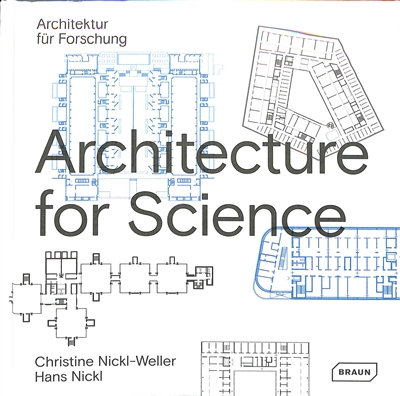
Research buildings - An architectural challenge
Research is the driving force behind all innovation. Yet, for a long time, the research building, the nucleus of social change, languished as a purely functional building, ignored by architectural discourse. However, today there is consensus that structures for research and knowledge transfer can do and must do more than just provide workplaces and experimental areas. They are actually spaces of communication and inspiration, a reflection of our times.
In Architecture for Science, Christine Nickl-Weller and Hans Nickl share their wealth of experience in planning research and science buildings. They initiate a discourse on social significance, work-environment demands, and future challenges. Buildings dedicated to science are regarded within the context of urban structures, as highly specialized building styles, in their dimension as working and living environments, as well as regarding innovation in research and construction. An interdisciplinary approach is a key factor of this discussion, and thus this volume includes articles not only by architects, urban developers, and specialist planners, but also by experts from a wide range of research areas.
Forschungsgebäude - Eine architektonische Herausforderung
Forschung ist der Motor jeglicher Innovation. Das Forschungsgebäude, Keimzelle gesellschaftlicher Veränderungen, fristete lange ein Dasein als reiner Funktionsbau, abseits architektonischer Dialoge. Inzwischen müssen Räume für die Forschung und den Wissenstransfer mehr leisten, als die reine Bereitstellung von Arbeitsplätzen und Experimentierflächen. Sie sind Räume der Kommunikation und der Inspiration und ein Abbild ihrer Zeit.
In Architecture for Science teilen Christine Nickl-Weller und Hans Nicki ihren langjährigen Erfahrungsschatz in der Planung von Forschungs-und Wissenschaftsbauten. Sie eröffnen die Diskussion über deren gesellschaftliche Bedeutung, arbeitsweltliche Anforderungen und zukünftige Flerausforderungen. Sie betrachten Architektur für die Wissenschaft im Kontext urbaner Gefüge als hochspezialisierte Gebäudetypen, in ihrer Dimension als Arbeits-und Lebenswelt sowie im Hinblick auf Innovationen in Forschung und Bauproduktion. Die interdisziplinäre Annäherung ist dabei von entscheidender Bedeutung und so kommen neben Architekten, Stadt-und Fachplanern auch Experten verschiedener Forschungsrichtungen zu Wort.