Moroccan textile embroidery
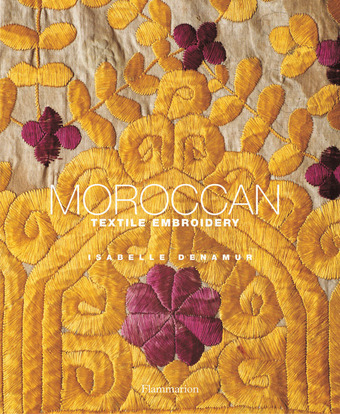
Moroccan textile embroidery is a
resplendent craft tradition born of the
desire to create a refined backdrop to
everyday life. The embroideries-the
product of patience, perseverance, and
rigor-use natural silk thread in radiant
colors such as flame yellow or old gold,
raspberry red, sky blue, or electric violet on
muslin, lawn, linen, cotton, or silk. The
embroidered pieces range from practical
items for the home such as curtains, bed
covers, tablecloths, and handtowels, to
clothing accessories such as belts, scarves,
and shawls. The decorative embroidery
serves also as a reinforcement to prevent
fragile fabrics from fraying, and as a
showcase for a young woman's talent with
a needle.
Isabelle Denamur takes us on a tour of
Morocco : from the ancient city of Fez to the
Andalusian-influenced Tétouan, and from
the bustling capital of Rabat to the town of
Azemmour, slumbering beside the ocean,
its small white houses and splendid
gardens nestled within ocher-colored
ramparts. Within each city a unique
embroidery art form has developed, from
designs based on Byzantine bestiary to
floral motifs of tulips, hyacinths, and wild
roses, and from abstract patterns in a
multitude of bright colors to motifs
reminiscent of manuscript illuminations
and mosaics.
Moroccan Textile Embroidery features
over a hundred exceptional pieces of
embroidery, along with rare photographs
and paintings of Moroccan life that place
this superb craftwork in its historical
context. It aims to be a complete resource,
containing detailed references to apprenticeship
methods, techniques, and materials,
and above all providing an eloquent
testimony to the sophisticated artistic
tastes of a society where beauty and
practicality go hand in hand.