Corps au supplice et violences de guerre dans l'Antiquité
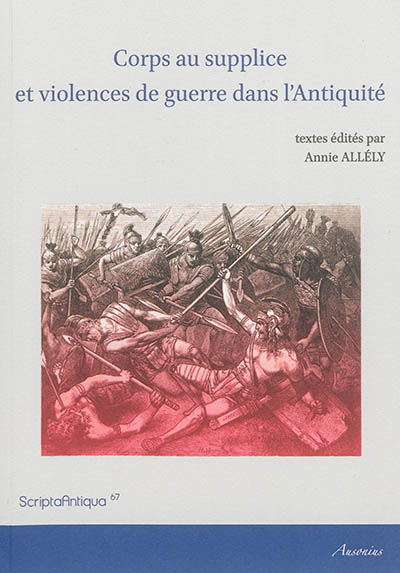
Depuis quelques années le corps est devenu un thème majeur de la recherche
historique et de nombreux travaux sont régulièrement publiés. Parmi les thèmes
étudiés en relation avec le corps, il faut retenir celui de la violence et de la guerre.
Dans le cadre de cet ouvrage, onze chercheuses et chercheurs se sont interrogés pour
les mondes oriental, grec, romain et celtique, à partir des témoignages littéraires,
iconographiques et archéologiques, sur les raisons et les justifications qui ont mené
à des actes de violence sur le corps humain et ont essayé aussi d'en comprendre la
signification. Trois thèmes ont été retenus. Le premier concerne le traitement du
corps des ennemis morts ou des prisonniers vivants, le deuxième traite une mutilation
particulière infligée à des personnages de haut rang, à savoir leur décapitation et
l'amputation de leur main droite. Enfin, dans le troisième thème, sont analysées les
violences de guerre collectives.
In recent years the human body has formed a major theme in historical research,
and has been the subject of numerous scholarly publications. One essential aspect
of such study is, the body as the object of violence and its role in war: in this book,
eleven scholars explore this theme in connection with the civilisations of the East, of
Greece, Rome and the Celtic World. Using evidence from literature, iconography and
archeology, our authors explore the reasons behind - and the rationale offered for -
acts of violence perpetrated against the human body. There are three main themes :
the treatment of the bodies of dead enemies or living prisoners ; mutilation specific
to eminent persons, namely decapitation and the cutting off of the right hand ; and
violence against whole groups in war.