Pour un art pauvre : (inventaire du monde et de l'atelier). Towards a poor art : (inventory of the world and the studio)
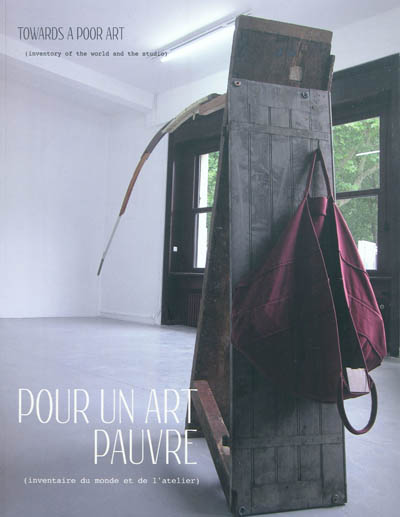
Si l'appellation d'art pauvre désigne un mouvement
artistique italien des années 60, elle peut aussi
être considérée comme une attitude dont la présente
exposition cherche la pertinence à une époque
de surproduction des objets et des images, où la
valeur marchande de l'art est souvent soulignée.
Tous sculpteurs, les huit artistes présentés portent
une attention particulière au matériau dans une
démarche ouverte qui lie fortement l'oeuvre tant à
l'implication physique de l'artiste qu'au lieu qui
l'accueille.
Plutôt qu'un produit terminé, l'oeuvre apparaît
comme un process, rappelant certaines expériences
des années 70. Ces artistes choisissent des matériaux
à portée de main : le polystyrène expansé, le
plâtre, les produits de maquillage, le terreau, les
tickets de caisse, le polyane, les chutes de contreplaqué
ou de medium, souvent des matériaux d'emballage
ou des fournitures trouvées à l'atelier.
Certains faits sociaux, la rencontre des fumeurs ou
l'esthétique «moderne» de structures métalliques
par exemple, bien ancrés dans la vie contemporaine
peuvent à leur tour devenir des matériaux au même
titre que la terre ou le bois.
While the name art pauvre refers to the Italian
Arte Povera movement of the 1960s, it may also
be viewed as an attitude, whose relevance to an
age of overproduction of objects and images, often
placing the emphasis on the market value of art, is
examined in this show.
The eight featured artists, all sculptors, pay
special attention to the medium in an open approach
whereby the work is tightly bound up with both the
artist's physical involvement and the host site.
Rather than a finished product, the artwork appears
as a process, recalling certain experiments of the
1970s. These artists choose whatever materials come
to hand: expanded polystyrene, plaster, makeup
products, peat, cash receipts, polythene, offcuts of
plywood or spare medium, often packaging materials
or other supplies found in the studio. Certain
social occurrences, such as the meeting of smokers
or the 'modern' aesthetic of metal structures, well
grounded in contemporary life, can in turn be used
as materials, just like clay or wood.