Starchitecture(s) : figures d'architectes et espace urbain. Starchitecture : celebrity architects and urban space
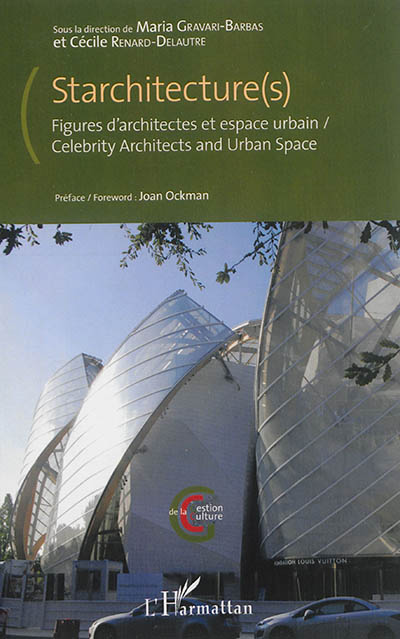
Les années 1990 et 2000 se caractérisent par la profusion de projets architecturaux
iconiques, dans une surenchère que peu d'autres périodes dans l'histoire de
l'architecture avaient connue, alimentée à la fois par les décideurs locaux, la circulation
des capitaux mais aussi les classes transnationales. Dans ce contexte, les icônes globales
d'architecture sont des emblèmes territoriaux qui affirment l'identité et le dynamisme
culturel d'un territoire. La «starchitecture» doit son succès à sa capacité de créer du
local tout en mobilisant le global ; de «positionner une ville sur la carte» tout en
s'insérant dans des réseaux globaux qui sont ceux des architectes qui la construisent,
des capitaux qui la produisent et des classes mobiles internationales, touristiques ou
professionnelles qui la consomment.
Cet ouvrage porte un regard critique sur ces projets qui ont façonné l'image et
l'identité des villes contemporaines. Il s'intéresse à la figure des «starchitectes» qui
les produisent, aux acteurs locaux qui les commanditent, aux populations qui les
«consomment». Il s'intéresse également à la nouvelle géographie qu'ils esquissent. Que
nous disent ces projets architecturaux iconiques sur la nouvelle géopolitique mondiale ?
The 1990-2000s are characterized by a proliferation of iconic projects, in a one-upmanship
that has rarely been seen in any other period of the history of architecture,
fed simultaneously by local decision-makers, infusion of capital and transnational
classes. In this context, global icons of architecture are territorial landmarks that
affirm the identity and cultural vitality of an area. "Starchitecture" owes its success
to its ability to create the local while mobilizing the global; of "putting a city on the
map" while at the same time integrating it into the global networks of the architects
who build it, the capital that produces it and the mobile, international tourism or
professional classes which consume it.
This book offers a critical analysis of these projects that have shaped the image
and identity of contemporary cities. It focuses on the figures of the "starchitects" who
produce them, on the local players that sponsor them, on the people who "consume"
them. It also examines the new geography that they identify. What do these iconic
architectural projects say on the new world geopolitics?