Scènes du Sud : Méditerranée orientale : exposition, Carré d'art-Musée d'art contemporain de Nîmes, 13 juin-21 sept. 2008
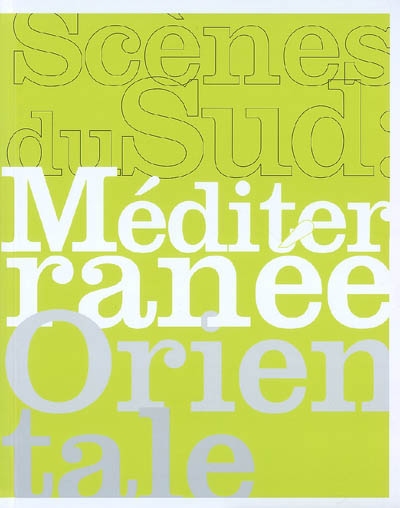
Scènes du Sud : Méditerranée Orientale
Scènes du Sud : Méditerranée Orientale regroupe les oeuvres de dix-neuf artistes nés entre 1960 et 1981 qui travaillent entre Bosnie, Roumanie, Turquie, Liban, Israël, Palestine, Égypte, mais aussi Allemagne, Pays-Bas et États-Unis. Tous sont imprégnés des données historiques et politiques de la région.
Depuis les années 90, les propositions qui émergent ouvrent de nouveaux chantiers dans la relation des pratiques artistiques à l'événement et au documentaire. Pour qui aborde la zone dans une perspective contemporaine, la multiplication des initiatives et des lieux (biennales, résidences d'artistes, programmes curatoriaux, festivals à Istanbul, Sarajevo, Le Caire, Jérusalem, Beyrouth, Sharjah, Dubaï) témoigne, après le cinéma, du dynamisme des arts plastiques et d'une volonté de prendre en charge soi-même sa propre image.
Inversant la priorité des médias, cette exposition se fait l'écho de ce laboratoire artistique où le projet d'exister peut aller jusqu'au bout : exister non pas dans l'image renvoyée en boucle sur les ondes, mais comme une base d'action où peuvent se fonder connaissance et analyse critique des faits.
Scènes du Sud : Méditerranée Orientale includes works by artists born between 1960 and 1981 and working in Bosnia, Romania, Turkey, Lebanon, Israel, Palestine, Egypt, and also Germany, the Netherlands and the USA. All are well versed in the region's historical and political data.
Since the '90s, the offerings coming out are opening up new developments in how artistic practices relate to events and to the documentary. For anyone coming to the area now with a contemporary perspective, there are so many initiatives going on at so many venues (biennials, artists'residencies, curatorial programmes, festivals in Istanbul, Sarajevo, Cairo, Jerusalem, Beirut, Sharjah, Dubai), indicating, after the cinema, the dynamism of the visual arts and the region's determination to look after its own image.
Reversing the priorities of the media, this exhibition is a sounding-board for this artistic laboratory in which the project of existing can be taken all the way ; existence not in the image broadcast in a loop, but as a basis for action, for knowledge and critical analysis of the facts.