Paolo Veronese : the Petrobelli altarpiece
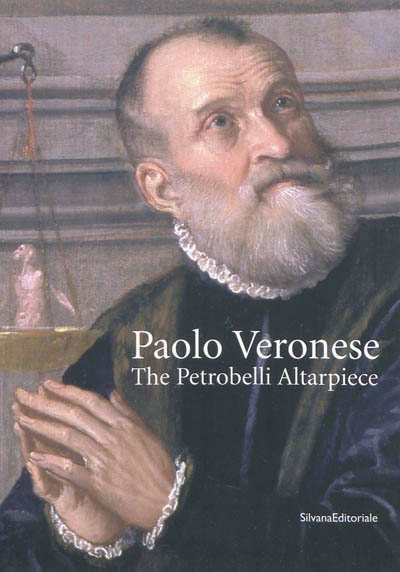
The Petrobelli Altarpiece was painted by Paolo Veronese (1528-88) around 1563 for the
cousins Antonio and Girolamo Petrobelli, for their family burial chapel, dedicated to
Saint Michael, in the church of San Francesco in Lendinara, near Venice. When the Order
of the Franciscan Minor Conventual Friars was suppressed in 1769, the church and convent
were abandoned and by 1811 they had been replaced by fields. In 1788, Veronese's
large painting was ruthlessly cut down and sold in pieces. The three known surviving
fragments are now preserved in the National Gallery of Canada in Ottawa, the National
Gallery of Scotland in Edinburgh, and Dulwich Picture Gallery in London. The central
part of the altarpiece, representing Saint Michael, disappeared after the cutting-up of the
painting. Long thought lost, what remains of the archangel - its head - has been rediscovered
in the Blanton Museum of Art in Austin, Texas, and is here presented for the first
time together with the other fragments.
Paolo Veronese: The Petrobelli Altarpiece reunites the four parts of Veronese's glorious
altarpiece, which have not been seen together since the painting's brutal division in the
eighteenth century. This exhibition catalogue presents essays that examine the role of
donor portraiture in Venetian and Veneto altarpieces during the Renaissance (Jennifer
Fletcher), the fullest history of the Petrobelli Altarpiece that has ever been written (Xavier
F. Salomon), and a technical analysis of the extant fragments (Stephen Gritt).
The Scottish artist and dealer Gavin Hamilton, writing about the altarpiece and its mutilation
in 1788, tragically noted how the painting 'will be sold just like meat in a butcher's
shop, poor Paolo, poor Painting.' The reunion and reconstruction of the altarpiece is a
unique occasion to re-evaluate this much abused and mistreated Venetian Renaissance
masterpiece.