Caliban, n° 53. La guerre de 14 re-présentée : l'art comme réponse à la guerre. Representing world War One : art's response to war
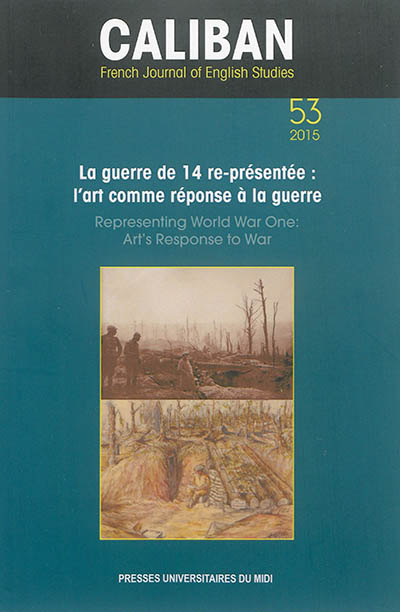
La guerre de 14 re-présentée :
l'art comme réponse à la guerre
Ce numéro propose un itinéraire à travers les arts pour examiner en premier
lieu l'écriture de la Première Guerre mondiale et ensuite, dans la partie hors
thème, l'écriture féminine. La sélection de romans, poèmes, musique et films
témoigne de la représentation de la Première Guerre mondiale dans la culture
littéraire canadienne comme dans la poésie nigériane, la musique
d'avant-garde allemande ou le cinéma anglo-saxon. Des musiciens allemands rendent
hommage aux victimes du conflit en rappelant comment un régiment de musiciens
afro-américains introduisit le jazz en Europe. De Wilfred Owen aux poètes nigérians
qu'il a influencés à l'instar des autres poètes combattants anglais, de la scène
à l'écran, la mémoire de la guerre est ici envisagée de façon paneuropéenne et
transatlantique pour dénoncer, à travers l'art, le démembrement de l'humain, et
aussi de l'animal dans le roman de Findley The Wars. Le volume consacre une
dernière partie à la première oeuvre du prix Nobel de littérature Alice Munro,
Dance of the Happy Shades.
Representing World War One : Art's Response to War
This issue proposes an itinerary through the arts, showing the role of art in the
denunciation of war. The selection of novels, poems, music or films confronts
the issue of war through pan-European and transatlantic views, with a first part
dedicated to the novel by Findley The Wars , which speaks about the bestiality of
wars and the humanity of animals. The volume shifts from the examination of
Wilfred Owen's oeuvre, to the influence of British War poets on Nigerian poetry,
to avant-garde musicians' response to war, or to its representation on stage and
screen. The final section, which is unrelated to the theme of war, brings together
essays on the first collection of short stories by the Canadian Nobel Prize winner
Alice Munro which specifically highlight the various strategies she displays in
Dance of the Happy Shades.