Les établissements des élites omeyyades en Palmyrène et au Proche-Orient
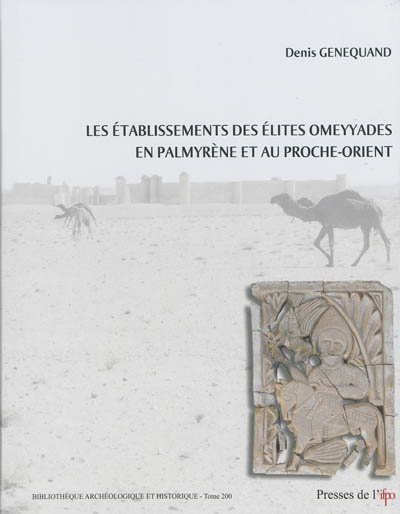
Au début de l'époque islamique, sous la dynastie des Omeyyades,
le Proche-Orient (Bilad al-Sham) a vu la construction de nombreux
établissements aristocratiques appartenant aux nouvelles élites
musulmanes. Souvent appelés «châteaux du désert», carmajoritairement
situés dans les régions steppiques du Proche-Orient, ces établissements
sont organisés autour d'un palais ou d'une résidence et comprennent de
nombreuses autres composantes, telles que bain, mosquée ou diverses
infrastructures agricoles. Depuis près d'un siècle, leur rôle a soulevé de
vifs débats parmi les chercheurs travaillant sur les débuts de l'islam.
L'enquête menée par Denis Genequand s'attache à mieux en
comprendre les fonctions et s'oriente en deux directions. Sur la base
de prospections et de fouilles archéologiques, l'auteur étudie d'abord
de manière détaillée une région, la Palmyrène, et ses différents
établissements aristocratiques omeyyades (Qasr al-Hayr al-Sharqi,
Qasr al-Hayr al-Gharbi, al-Bakhra', Qudaym, al-Qunayya, ainsi
que la ville de Palmyre). Puis, pour l'ensemble du Proche-Orient, il
traite les questions portant sur la forme et les multiples fonctions de
ces établissements. Un accent particulier est mis sur le problème de
leurs fonctions économiques, en tenant compte de l'ensemble de la
documentation archéologique disponible.
Accompagné d'une riche iconographie, cet ouvrage donne à
l'archéologie une place de premier plan pour mieux saisir l'histoire
économique et sociale des débuts de l'islam.
In the early Islamic period, under the Umayyad dynasty, the Near
East (Bilad al-Sham) witnessed the construction of numerous aristocratic
settlements belonging to the new Muslim elites. These settlements were
organised around a palace or a residence and comprised numerous other
components, such as mosque, bath and varied agricultural structures.
They are often referred to as the "desert castles" because a majority
of them are situated in steppe-land areas. Since the beginning of the
past century, their function has been the object of long debates amongst
scholars working on early Islam.
The investigations conducted by Denis Genequand pay particular
attention to a better understanding of their function, in two ways.
Firstly, on the basis of archaeological surveys and excavations, the
author presents a thorough study of the region around Palmyra and its
Umayyad aristocratic settlements (Qasr al-Hayr al-Sharqi, Qasr al-Hayr
al-Gharbi, al-Bakhra', Qudaym, al-Qunayya, as well as the town of
Palmyra). Then, dealing with the whole Near East, he considers the
questions related to the formal and multi-functional aspects of these
settlements. The problem of their economic function is particularly
investigated, taking into consideration all the available archaeological
data.
Richly illustrated, this volume rightly gives archaeology a premier
role for better understanding the economic and social history of early
Islam.