Medicine and narration in the eighteenth century
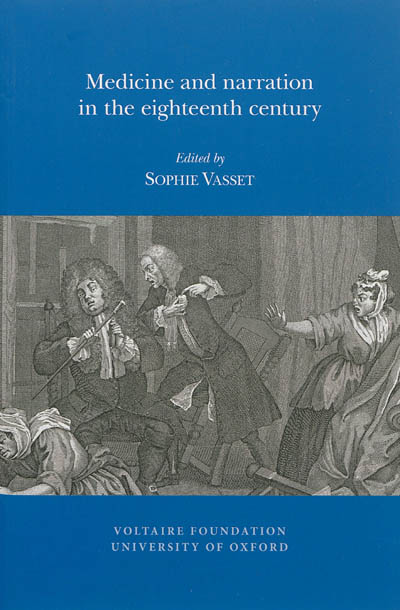
How did doctors argue in eighteenth-century médical pamphlet wars ? How literary, or clinical, is Diderot's depiction of mad nuns ? What is at stake in the account of a cataract operation at the beginning of Jean-Paul's novel Hesperus ? In this pioneering volume, contributors extend carrent research at the intersection of medicine and literature by examining the overlapping narrative stratégies in the writings of both novelists and doctors.
Focusing on a wide variety of sources, an interdisciplinary team of researchers explores the nature and function of narration as an underlying principle of such writing. From a reading of correspondence between doctors as a means of continuing professional education, to the use of inoculation as a plotting device, or an examination of Diderot's physiological approach to mental illness in La Religieuse , contributors highlight :
- how doctors exploited rhetorical techniques in both clinical writing and correspondence with patients.
- how novelists incorporated médical knowledge into their narratives.
- how models such as case-histories or narrative poetry were adopted and transformed in both fictional and actual medical writing.
- how these narrative strategies shaped the way in which doctors, patients and illnesses were represented and perceived in the eighteenth century.