Le statut du musicien dans la Méditerranée ancienne : Egypte, Mésopotamie, Grèce, Rome : actes de la table ronde internationale tenue à Lyon, Maison de l'Orient et de la Méditerranée (Université Lumière Lyon 2), 4-5 juillet 2008
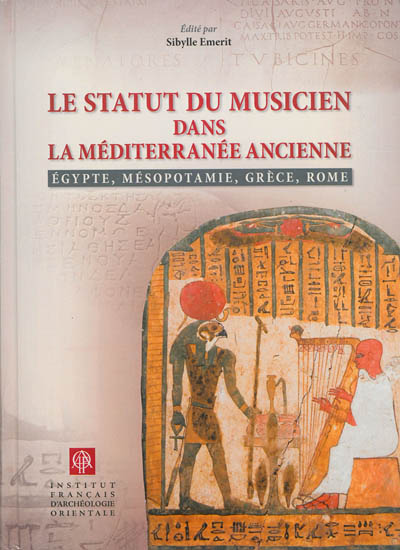
La question du statut du musicien transcende les cadres chronologiques
et culturels et relève d'une double démarche, anthropologique
et historique. Ce thème, qui n'a jamais fait l'objet d'une
véritable étude pour l'Antiquité, est ici appréhendé à travers une
approche transversale et comparative. La table ronde internationale
qui s'est tenue à Lyon, en 2008, a ainsi permis d'interroger la
figure du musicien dans les sociétés égyptienne, mésopotamienne,
grecque et romaine, du IV<sup>e</sup> millénaire avant J.-C. jusqu'au tout
début du christianisme.
Tantôt adulé, tantôt méprisé, le musicien de métier n'a pas un rôle
univoque dans les sociétés anciennes. Cet ouvrage collectif vise à
en cerner les contours en abordant la rémunération, les honneurs,
l'apparat, la formation et le savoir-faire, mais aussi les limites juridiques
et sociales qui frappent parfois le musicien professionnel.
Établie en fonction de l'instrument de musique, de la proximité
avec le pouvoir, du contexte de la prestation musicale, la hiérarchie entre les musiciens varie de manière
significative selon les sociétés. L'ouvrage souligne ainsi les différences marquées entre les protagonistes,
selon qu'ils sont hommes ou femmes, libres ou esclaves, inscrits dans une corporation ou non.
The question of the status of musicians transcends chronological and cultural boundaries and demands
a twofold approach, combining anthropology and history. This topic, which has never before been the
subject of a thorough study in the case of the Ancient World, is approached here from an interdisciplinary
and comparative angle. The International Round Table held at Lyon in 2008 addressed the figure
of the musician in Egypt, Mesopotamia, Greece and Rome from the fourth millennium BC up to the
beginnings of Christianity.
Sometimes adored, sometimes despised, professional musicians did not have a simple role in ancient
societies. The aim of this volume is to define the contours of their status by addressing payment, honours
equipment, training and skills, as well as the legal and social limitations which were sometimes placed
on the status of the professional musician.
Each society had its own hierarchy in which musicians occupied very different places according to the
relative prestige of their musical instruments, their proximity to power, the context of the performance,
or the gender of the performer. The contributions to this volume explore the marked differences in
status between performers, according to whether they were male or female, free or slave, members of
a guild or not.