Diseases of tropical tree crops
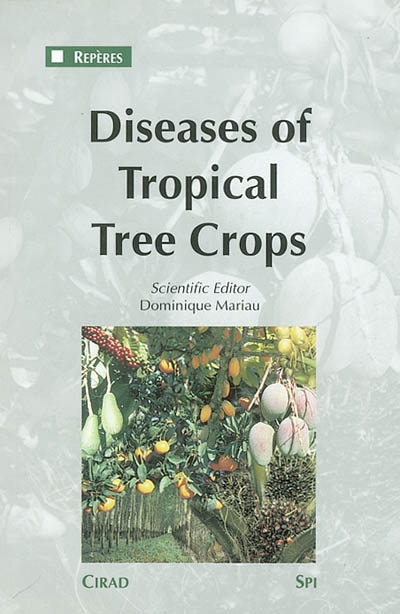
About the Book
This work summarises several decades of laboratory and field
research by specialists from the Tree Crops, Fruit and Horticultural
Crops, and Forestry Departments of CIRAD (Centre de Cooperation
Internationale en Recherche Agronomique pour le Développement).
Their results are the fruit of extensive laboratory and field research.
The authors have described about fifty often serious diseases that can
cause very substantial yield losses, thereby threatening and
sometimes even preventing the cultivation of several crops in
different parts of the world. In-depth knowledge of the biology,
genetic diversity and pathogenicity of the pathogen is essential for
the development of a control method. Breeding resistant planting
material is the most widely practised and often the only possible
method of control. It calls for extensive research by both plant
pathologists, for developing inoculation techniques, and breeders,
for producing resistant cultivars. Research on genetically modified
planting material is still in its infancy but appears to be very
promising. Plant pathologists still often resort to using pesticides,
particularly synthetic substances, whilst striving to reduce the dosage
and treatment frequency as part of a rational chemical control
strategy. In many cases, these methods are complemented by crop
techniques in order to reduce pathogen pressure and make the
environment less favourable for pathogen development. Viral
diseases-phytoplasmas and phytomonas-are generally
transmitted by insects of the hemipteran group. Lowering insect
population levels has proved to be a very effective control method in
several cases.
Drastic measures have to be taken to prevent the spread of
diseases or pathogens, especially through plant material exchanges,
which should be subjected to strict quarantine regulations.
Developing a control method often means integrating different
techniques, whose development must take the socio-economic
context of rural populations into consideration. Only close
collaboration between specialists and produce managers will enable
farmers to fully benefit from advances made in their research.