Paris
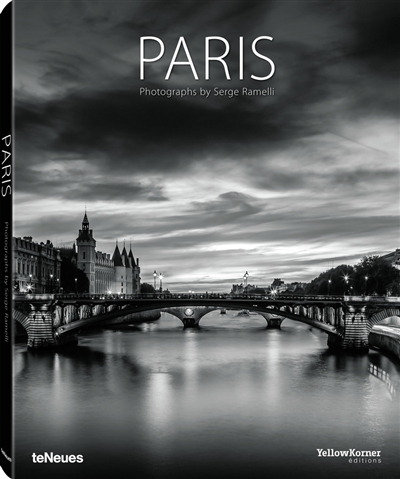
Serge Ramelli s'inscrit dans la longue tradition des photographes arpenteurs,
société intimiste dont Eugène Atget fut certainement le grand fondateur.
Ramelli parcourt la ville, appareil en bandoulière, à l'affût des lumières et des
scènes de rue opportunes. Mais dans ses images parisiennes, il évacue la
dimension documentaire traditionnellement associée à la street photography.
La figure humaine en est ainsi totalement absente. Exit également cette -
déjà vieille - volonté de rendre surréaliste le banal, le quotidien, volonté
souvent exprimée par l'usage du cadrage resserré ou du zoom. Les angles
de prise de vue sont élargis, les formats s'agrandissent, et surtout, la retouche
vient «cuisiner» le «cru» de la captation originelle. Bien que citadins, les
sujets semblent être photographiés avec une distance similaire à celle de la
photographie aérienne. L'image respire.
Serge Ramelli fits in well with the long tradition of surveyor photographers,
an intimate collection of aficionados of whom Eugène Atget was certainly
the great founder. Ramelli criss-crosses the city, with a shoulder strap on
his camera, on the lookout for promising lighting and street scenes. Yet
his Parisian images are devoid of the documentary dimension traditionaly
associated with street photography. The human figure is totally absent
from his images. Also missing is this - already venerable - will to make the
mundane and the everyday appear surreal, a will often expressed by the use
of narrow framing or zoom. The angles of view are widened, the formats
expanded, and above all, editing arrives to "cook" the "rawness" of the
original image captured. Though they are city-dwellers, the subjects seem to
have been photographed from a distance similar to that of aerial photography.
The image breathes.
Serge Ramelli reiht sich ein in die lange Tradition der umherschweifenden
Fotografen, einer intimistischen Gruppe um deren Begründer Eugène Atget.
Ramelli durchstreift die Stadt mit umgehängtem Fotoapparat, auf der Lauer
nach geeigneten Lichtverhältnissen und Straßenszenen. In seinen Parisbildern
jedoch verlässt er die dokumentarische, traditionell mit der Street
Photography verknüpfte Dimension. Hier fehlt jegliche menschliche Gestalt.
Schluss auch mit dem - bereits antiquierten - Streben nach einer surrealistischen
Darstellung des Banalen, des Alltäglichen, das oft erreicht wird durch
enge Bildeinstellung oder Zoom. Die Aufnahmewinkel sind verbreitert, die
Formate werden grôßer und vor allem: die Retusche "bearbeitet" das "Rohe"
des ursprünglich eingefangenen Bildes. Die Themen scheinen, wenn sie auch
städtischen Charakters sind, mit einer Distanz fotografiert worden zu sein, die
der des Luftbildes entspricht: das Bild atmet.