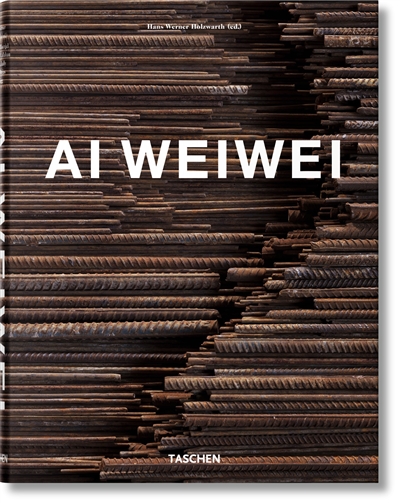
Ai Weiwei
Artiste engagé
Ai Weiwei n'est pas connu uniquement pour son art. Ses prises
de position en faveur de la liberté d'expression et contre le pouvoir
arbitraire de l'Etat ont contribué à sa notoriété bien au-delà des
frontières du monde de l'art. Son oeuvre est politiquement et socialement
engagée : pour Fairytale , à Cassel, il offre à 1001 Chinois
de diverses régions et couches sociales leur premier voyage à
l'étranger ; à la Tate Modern de Londres, son installation faite de
100 millions de graines de tournesol en porcelaine fabriquées
à la main en Chine est une réflexion sur l'individu et la masse ;
en mémoire des nombreux enfants parmi les victimes du tragique
séisme au Sichuan, il crée à Munich une frise de cartables et une
sculpture monumentale composée de barres d'acier redressées
récupérées sur les lieux de la catastrophe. En 2011, il est détenu
durant 81 jours par la police chinoise, sans aucun acte d'accusation,
et on lui confisque son passeport. Malgré les protestations
s'élevant dans le monde entier et d'innombrables manifestations
de solidarité, son passeport ne lui sera rendu qu'en 2015. Depuis,
il peut à nouveau quitter la Chine - l'occasion de redécouvrir
une oeuvre qui a permis au militant Ai Weiwei de faire entendre
sa voix.
La vie et l'oeuvre d'Ai Weiwei
Ai Weiwei est un des représentants majeurs de la scène artistique
contemporaine. C'est dans le New York des années 1980 qu'il se
familiarise avec l'art conceptuel et l'appropriation art, réalisant des
sculptures à partir d'objets quotidiens et prenant d'innombrables
photos documentant son séjour. À son retour en Chine, il trouve
rapidement sa voie artistique. Ses sculptures, installations ou
projets architecturaux associent l'héritage culturel de son pays aux
stratégies du modernisme occidental. L'actualité prend progressivement
une place de plus en plus importante dans son art, puis
dans ses prises de positions sur les réseaux sociaux. L'engagement
devient inséparable de l'oeuvre. Le présent ouvrage est un véritable
document historique : il s'agit de la première monographie
exhaustive de l'artiste, réalisée en coopération étroite avec lui
à un moment où il était encore frappé de l'interdiction de quitter
la Chine. De nombreuses photographies d'archives témoignent du
quotidien dans son atelier de Pékin, de la réalisation de ses oeuvres
et de ses actions politiques. Elles s'accompagnent de déclarations
et d'interviews réalisées spécialement pour cet ouvrage.
The artist activist
Ai Weiwei is known not only for his art. His reputation as a
champion for the right to free expression and against arbitrary
state power reaches far beyond the art world. His work is consequently
infused with a deep social and political commitment:
when he brings 1001 Chinese citizens from all classes and
regions to Kassel for their first trip abroad in Fairytale ; when
with 100 million handmade porcelain Sunflower Seeds strewn
across the floor at Tate Modern in London he reflects on the
individual and his place in the crowd; or when his work reacts
to the tragedy of the Sichuan earthquake, in a frieze of school
bags commemorating the many children among the victims,
or in a monumental sculpture where he models the torn ground
from reinforcing bars found in the rubble and straightened
out. In 2011, Ai was detained for 81 days by the Chinese police
without indictment and his passport was taken away. Despite
international protests and gestures of solidarity he received
it back only in 2015. Now he is allowed to travel outside of
China again - a perfect occasion for getting newly acquainted
with Ai as an artist whose work formed the foundation for his
activism.
The life and work of Ai Weiwei
Ai Weiwei is one of the most important artists working today. He
had a formative encounter with conceptualism and appropriation
art during his time in 1980s New York, where he made his first
sculptures from everyday objects and took countless documentary
photos. Returning to China in the following decade, Ai quickly found
his own artistic voice. He engaged with the cultural heritage of his
country, which he combined with strategies of western modernism
in sculptures, installations, and architectural projects. Increasingly
he took up topical subjects, first in his art and then on social
media. The artist and the activist became an inseparable personal
union. This book is itself a historical document: it was produced as
the first in-depth monograph in close collaboration with Ai during
a time when he still couldn't travel abroad. Countless images from
his archives show the studio day to day, the production of works,
the political actions. They are accompanied by artist's statements
taken from interviews made especially for this book.
Künstler und Aktivist
Ai Weiwei kennen wir nicht nur als Künstler. Sein öffentliches
Eintreten für das Recht auf freie Meinung und gegen staatliche
Willkür hat ihn weit über die Kunstwelt hinaus bekannt gemacht.
Sein Werk ist von sozialem und politischem Engagement geprägt:
Für Fairytale brachte er 1001 Chinesen aus allen Schichten
und Regionen auf ihrer ersten Auslandsreise nach Kassel;
in der Tate Modern in London reflektierte er mit 100 Millionen
auf dem Boden liegenden, in China handgefertigten Sonnenblumenkernen
aus Porzellan über Individuum und Masse; nach
der Tragödie des Sichuan-Erdbebens schuf er im Gedenken an
die vielen Kinder unter den Opfern in München ein Fries aus
Schulranzen und entwarf aus wieder gerade gehämmerten
Armiereisen die monumentale Skulptur einer Bodenverwerfung.
2011 wurde Ai dann für 81 Tage ohne Anklageerhebung von der
chinesischen Polizei inhaftiert und sein Pass eingezogen. Trotz
weltweiter Proteste und unzähliger Solidaritätsbekundungen
erhielt er ihn erst 2015 zurück. Seitdem kann er wieder außerhalb
Chinas reisen - ein guter Moment, um ihn und sein Werk
neu kennenzulernen, denn es ist die Kunst, die dem Aktivisten
Ai Weiwei erst seine Stimme verliehen hat.
Das Leben und Werk von Ai Weiwei
Ai Weiwei ist heute einer der international bedeutendsten Künstler.
Seine prägende Begegnung mit Konzeptkunst und Appropriation
Art hatte er während seiner Zeit im New York der 1980er-Jahre, wo
er Skulpturen aus Alltagsgegenständen und unzählige Dokumentarfotos
machte. Nach der Rückkehr in seine Heimat China im folgenden
Jahrzehnt fand er die eigene künstlerische Stimme. Er wandte
sich dem kulturellen Erbe seines Landes zu, das er in Skulpturen,
Installationen und als Architekt mit den Ausdrucksformen der westlichen
Moderne verband. Immer stärker nahm er aktuelle Themen
ins Visier, erst in seiner Kunst und später über die sozialen Medien.
Künstler und Aktivist wurden zu einer untrennbaren Einheit. Das
vorliegende Buch ist ein historisches Dokument: In einer Zeit, als
Ai das Reisen noch verboten war, wurde es als erste umfassende
Monografie in enger Zusammenarbeit mit dem Künstler produziert.
Zahlreiche Bilder aus dem Archiv zeigen den Alltag des Studiobetriebs
in Peking, die Herstellung der Werke und die politischen
Aktionen. Die Abbildungen werden von Statements aus Interviews
begleitet, die speziell für dieses Buch geführt wurden.