Bahariya I : le fort romain de Qaret el-Toub I. Vol. 1
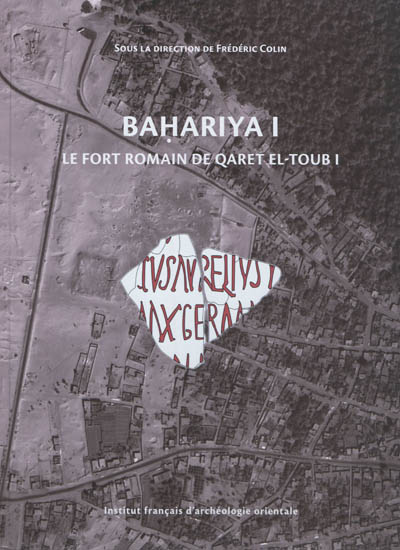
Qaret el-Toub est un des rares sites
du nord de l'oasis de Bahariya à
avoir échappé aux prospections
archéologiques menées par Ahmed Fakhry
dans les années 1930-1940. Le substrat rocheux
y accueille un cimetière utilisé de
la fin de l'Ancien Empire au Haut-Empire
romain, qui fait partie de la vaste couronne
de nécropoles entourant l'agglomération
de Psôbthis, chef-lieu antique
de la «Petite Oasis». Dans le dernier quart
du III<sup>e</sup> siècle, des castra furent installés
par-dessus les tombes, à l'aboutissement
des pistes caravanières en provenance du
sud (Darb el-'Arbayin) et du nord-ouest
(oasis de Siwa). Ce premier volume de la
publication des fouilles de Qaret el-Toub
s'attache à identifier la nature du site, à
diagnostiquer le potentiel scientifique de
son gisement archéologique et à établir
le cadre chronologique dans lequel fut
construite, entretenue et remployée la
fortification d'oasis chargée de manifester
localement et de protéger les institutions
publiques de l'État romain. Comme le fort
fut occupé sans discontinuer depuis sa
fondation, sous Dioclétien et Maximien,
jusqu'au X<sup>e</sup> siècle de notre ère, la séquence
des habitats qu'il abrite constitue
un observatoire privilégié pour l'étude de
la période de transition entre l'Antiquité
tardive et l'époque arabe.
Qaret el-Toub is one of the few
sites in the northern Bahariya
oasis that escaped the archaeological
surveys conducted by Ahmed
Fakhry in the 1930s and 1940s. A graveyard
settled on the bedrock was used
from the end of the Old Kingdom until
the early Roman Period. It belongs to the
large ring of cemeteries surrounding the
urban area of Psôbthis, ancient chief town
of the "Small Oasis". In the last quarter of
the 3rd century AD, military castra were
installed over the graves in the incoming
area of the caravan routes from the
south (Darb el-'Arbayin) and from the
northwest (Siwa Oasis). This first volume
of the final archaeological reports of the
excavations at Qaret el-Toub attempts to
identify the nature of the site, to make an
assessment of the scientific potential of
its archaeological field, and to determine
the overall chronology of the history of
this oasis fortress, that was built in order
to embody locally and to protect the public
institutions of the Roman State. As the
fort was occupied continuously, from its
building under Diocletian and Maximian
until the 10th century AD, the sequence
of occupation levels which it provides
makes it an ideal research field for the
study of the transitional period leading
from late Antiquity to Arabic times.