Tell el-Iswid : 2006-2009
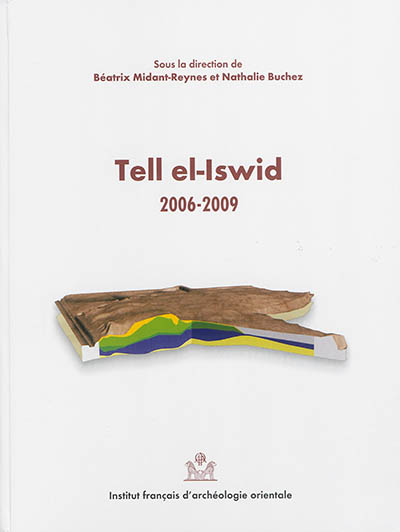
Découvert lors de prospections effectuées en 1987 par l'université d'Amsterdam, Tell el-Iswid s'est
d'emblée présenté comme un site de première importance pour la connaissance du IV<sup>e</sup> millénaire dans
le delta oriental du Nil. Tell el-Iswid fait partie d'un ensemble d'occupations humaines installées hors
inondation, sur des gezira , qui témoignent des changements culturels majeurs ayant affecté cette partie
septentrionale de l'Egypte à cette époque. L'un des principaux intérêts de Tell el-Iswid est de présenter
une stratigraphie qui couvre la totalité du IV<sup>e</sup> millénaire. C'est vers cet objectif que se sont concentrés,
de 2006 à 2009, les efforts de la mission française, dans le cadre de l'Institut français d'archéologie
orientale, avec le soutien financier de la Commission des fouilles du ministère des Affaires étrangères.
L'ouvrage présente l'ensemble des résultats obtenus de la réalisation d'une coupe transversale de 22 m de
longueur sur 2 m de hauteur, qui a permis de préciser, de compléter et d'élargir la stratigraphie observée
et décrite par l'équipe hollandaise quelque vingt ans auparavant. Les travaux effectués ont également
permis d'appréhender les modes d'occupation de la gezira dans cette partie du tell, les traditions
culturelles, qui connaissent des changements notoires, observables dans les structures domestiques - avec
notamment l'apparition de l'architecture de briques crues -, dans les évolutions de la céramique et de
l'industrie lithique. Les études conduites sur l'économie de subsistance, végétale et animale, montrent
que de tels changements y sont également perceptibles.
Tell el-Iswid was discovered during the surveys made in 1987 by the University of Amsterdam, and was
immediately recognised as an important site that provided information about the eastern Nile Delta
in the 4th Millenium B.C.E. Tell el-Iswid forms part of a set of human settlements located away from
floods, on geziras , which bear witness to the major cultural changes that have affected the northern
part of Egypt at the time. A significant component of Tell el-lswid is the stratigraphy of the site, which
spans the entire 4th millenium. It was this aspect that was the focus of the French mission between 2006
and 2009, which was undertaken within the Framework of the Institut français d'archéologie orientale
and with the financial support of the Commision on Archaeological Excavations of the Foreign Affairs
Ministry. This publication présents the results that were achieved by implementing a cross section 22 m
in length and 2 m in height at the site. Using this technique the mission was able to clarify and expand
the stratigraphy that was described by the Dutch team some twenty years ago. The cross section, as
well as additional work at the site, has assisted in understanding the natural development and the land
use of the gezira in this part of the tell. Development of cultural traditions can also be observed, such
as notable changes in domestic features, including the appearance of mud-brick architecture, as well
as changes in the ceramic and stone industries. Further studies conducted on the subsistence economy,
including plants and animals, reveal additional changes.