Du fleuve Niger au fleuve Congo : une aventure africaine
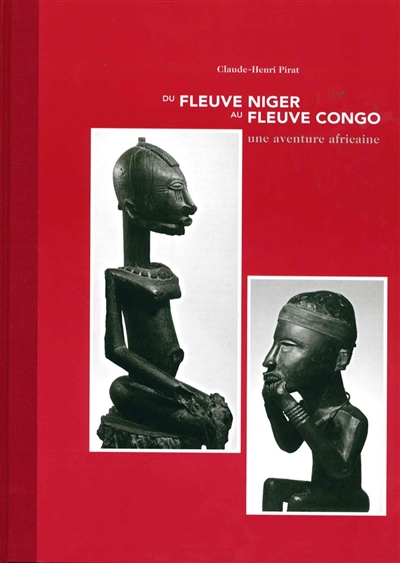
Claude-Henri Pirat, qui est déjà l'auteur de travaux publiés sur différents sujets
comme la statuaire des lobi ou le maître de buli dont il a dressé le catalogue raisonné,
nous dévoile ici, de la grande sculpture de l'afrique de l'ouest ou de l'afrique centrale
jusqu'aux objets les plus usuels, les oeuvres dont il est ou a été le collectionneur.
Grand voyageur, visitant régulièrement le continent africain jusque dans ses endroits
les plus reculés, il documente son livre de nombreuses photos de terrain.
Précédés d'un avant-propos d'anne-marie bouttiaux et d'une préface de françois neyt,
tous les textes, y compris les notices ethnographiques, sont de l'auteur et, comme il nous
le dit dans son préambule : «ayant décidé d'écrire moi-même le texte de ce livre,
cela me permettait de briser les codes, de ne pas circonscrire mon propos à une collection
d'oeuvres d'art qui n'est qu'un des volets de l'intérêt que je porte à l'afrique,
mais de l'élargir à la découverte que j'ai faite de ce continent, de ses habitants
et de ses productions artistiques, du marché de l'art et de ses acteurs,
des musées, et de certaines des grandes questions qui ont fait et font débat en la matière,
et qui ont alimenté chez moi des réflexions que j'ai pris la liberté d'exposer ici,
au cours de développements qui n'ont donc rien à voir avec un essai d'anthropologie,
d'histoire de l'art ou d'esthétique».
À cela s'ajoute un travail photographique original que l'auteur a décidé d'entreprendre
lui-même sur les oeuvres d'art présentées, en tentant de renouer avec la sobre élégance
de la photo en noir et blanc.
Claude-Henri Pirat, who has already authored different publications about lobi statuary
or the buli master of whom he established the 'catalogue raisonné', reveals in here,
from the great sculpture of west and central africa to the most usual objects,
the works of art he is or has been the collector of.
A great traveller, regularly visiting the african continent up to the most remote places,
includes many photographs from the field in his book.
Following the foreword of anne-marie bouttiaux and the preface of françois neyt,
all the texts, including the ethnographic ones are by the author and as he says to us
in his prologue : «having finally decided to write the text myself enabled me to
transgress established codes and not to limit its focus to a collection of works of art
which is only one of the facets of my interest for africa, and to broaden it's content
to include my discovery of this continent, of its inhabitants and its artistic production,
of the art market and its actors, of the museums, and of some of the great questions that
have been and still are under debate in this field, and that have fuelled in me reflections
which I have taken the liberty of exposing here, through developments that have
nothing to do with an anthropology, history of art or aesthetics essay.»
To this, is added an original photographic work the author has decided to undertake
himself concerning the works of art presented here, whith the aim of reviving
the elegant black and white sobriety.