Saint-Germain-des-Prés : mille ans d'une abbaye à Paris : actes du colloque international
Personnalité de premier plan longtemps injustement négligée, l'abbé Morard
(990-1014) peut être considéré comme l'initiateur d'un ambitieux programme de
travaux accompagnant la transformation de la basilique de Saint-Germain-des-Prés
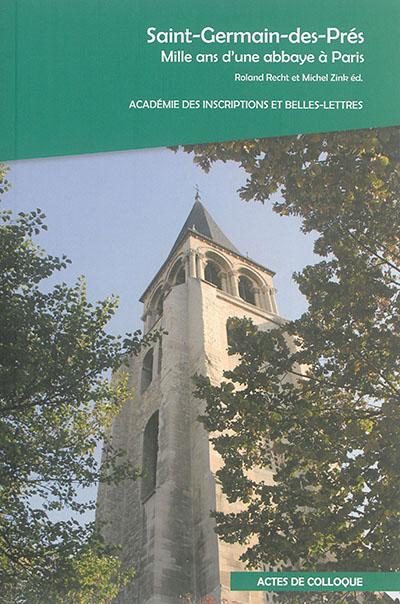
en abbatiale. Ils ont conféré à l'édifice actuel une grande partie de sa physionomie :
l'architecture en pierres appareillées avec soin du vaisseau et de la tour occidentale,
par exemple, ou le décor des chapiteaux historiés, qui demeurent parmi les très rares
témoignages de la sculpture de l'an mil.
L'Académie des Inscriptions et Belles-Lettres et la paroisse Saint-Germain-des-Prés
ont choisi de commémorer le millénaire de ce grand abbé en organisant un colloque, dont
l'ambition fut de porter à la connaissance d'un large public les perspectives nouvelles
qu'ouvrent les travaux les plus récents des historiens et des historiens de l'art. Les
différentes communications traitent aussi bien de l'époque de Morard que de l'histoire
ultérieure de l'abbaye jusqu'au XVII<sup>e</sup> siècle, lorsqu'elle devint un foyer intellectuel de
première importance au coeur de l'Europe savante.
A figure of great importance yet one far too long neglected, Abbot Morard (990-1014)
deserves credit for having initiated an ambitious campaign of construction
that transformed what was once the humble basilica of Saint-Germain-des-Prés
into an abbey church of the highest order. The work undertaken at his bequest has survived
in considerable measure, in the carefully dressed ashlar of the nave and western tower,
for example, or the historiated capitals of the nave, which stand as rare witnesses to the
practice of monumental sculpture at the millennium.
The Académie des Inscriptions et Belles-Lettres and the Parish of Saint-Germain-des-Prés
together chose to commemorate the millenary of Abbot Morard by means of
a colloquium, whose mission was to bring awareness to the general public of the new
perspectives offered by the latest research undertaken by historians and historians of art.
The articles in the present volume treat topics which range in date from the era of Abbot
Morard to the seventeenth century, during which the abbey assumed a preeminent role in
the intellectual and scientific discourse of Europe.