Four hidden metamorphosis : a remark on blood, muscle, mental disease and cancer
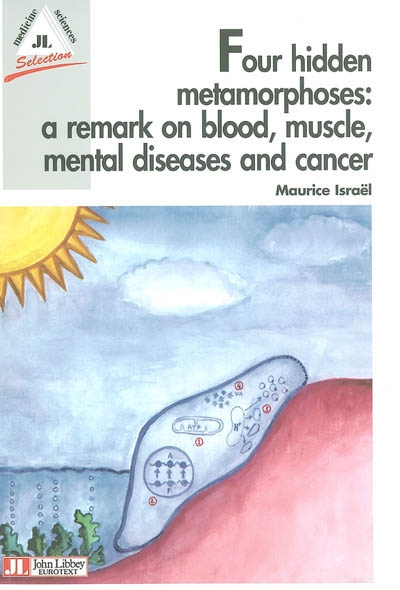
This book of biology and medicine shows how diseases
such as sickle cell anemia and Duchenne muscular
dystrophy are related to the body's adaptation to aerial
respiration. This adaptation is operated by a genetic switch
substituting a set of fetal proteins for more suitable,
regulated, adult isoforms. We discover how fetal or adult
metabolic pathways may control the switch, and propose
pharmacological treatments to boost the expression of the
fetal gene, acting as a "spare wheel" to replace the adult gene when it has
mutated. In fact this switch recapitulates a process reminiscent of the evolution
of amphibians when they left the water to live in air and on land. The fetus is
also an aquatic creature that discovers aerial respiration and the new weight of
the body at birth. The blood and muscle proteins will adapt. The metamorphosis
is not as evident as for a tadpole, but still as deeply written in our genes. In fact,
the switch is our second metamorphosis ; the story started much earlier when a
host cell, already surviving in oxygen, incorporated a bacteria, our future
mitochondria, that had a more efficient oxidative metabolism. A symbiotic
arrangement followed. In the course of development, the most ancient pathways
come on stage first, followed by the most recent mitochondrial acquisitions. The
developmental maturation of metabolic pathways changes our cells; it is our first
metamorphosis. It is involved in apoptosis in diseases such as Alzheimer's and
cancer. Since mitochondria had taken on the burden of making ATP, the ancient
oxidative mechanism became redundant. Its ATPase evolved, forming acidic
compartments that control neurotransmission and thermoregulation. This third
metamorphosis is implicated in other diseases (adrenoleucodystrophy). Finally
primates, who lost uricase, developed diseases related to the role of uric acid
which became their new antioxidant: gout, autism and schizophrenia seem to
depend on this last, fourth metamorphosis.